
Why Dubai Property in 2026 —
The Complete Investment Case
Dubai remains the world's most investor-friendly real estate market — 0% capital gains tax, 0% income tax on rental yield, 6–9% gross yields, a USD-pegged currency, and a RERA-regulated framework that protects every dirham you invest. This is the complete, data-driven investment case for 2026.
0%
Capital Gains Tax
6–9%
Avg. Gross Yield
AED 761B
Transaction Volume 2024
100,000+
New Residents / Year
Dubai Property in 2026 — Where the Market Stands
Dubai's real estate market delivered AED 761 billion in total transaction value in 2024 — a record that eclipsed the previous peak by 23%. In the first half of 2026, transaction volumes remained 15% above the same period in 2024, driven by continued population inflows, a growing base of international HNI investors, and a pipeline of masterplan communities from tier-1 developers.
Critically, Dubai's growth in 2026 is not speculative froth. It is underpinned by genuine end-user demand: the UAE now hosts over 3.8 million residents in Dubai alone, with projections of 5.8 million by 2040 under the Dubai Urban Master Plan. Each new resident requires housing — and the rental market tightness in established communities like JVC, Business Bay, and Dubai Hills confirms that demand continues to outpace quality supply.
For international investors, the combination of zero taxes, hard-currency denomination, and a 10-year Golden Visa pathway creates an investment proposition that major financial centres — London, Singapore, New York — simply cannot replicate.
The Tax Advantage — What You Keep vs What You Lose Elsewhere
The most significant structural advantage of Dubai property is the complete absence of property-related taxes. No income tax on rental income. No capital gains tax on sale profits. No inheritance or estate tax. No annual wealth tax. This transforms the net return profile dramatically against comparable markets.
| City | Capital Gains Tax | Rental Income Tax | Transfer / Stamp | Avg. Gross Yield |
|---|---|---|---|---|
| Dubai | 0% | 0% | 4% (one-time) | 6–9% |
| London | 18–24% | 20–45% | SDLT up to 12% | 3–4% |
| Singapore | 0–22%* | 17–22% | ABSD up to 60% | 3–4% |
| Mumbai | 12.5–20% | 10–30% | Stamp duty 5–6% | 2–3% |
| New York | 20–23.8% | 37%+ | Mansion tax 1–3.9% | 3–4% |
* Singapore ABSD rates for foreigners introduced in 2023. CGT for non-residents on property gains. Rates subject to change.
Rental Yields by Community — 2026 Data
Gross rental yields in Dubai vary significantly by community, asset type, and furnishing status. The data below represents typical gross yields for unfurnished long-term rentals. Furnished short-term rentals (Airbnb/VRBO) in tourist-facing areas can yield 10–15% gross but require active management or a licensed holiday home operator.
| Community | Asset Type | Gross Yield | Entry Price |
|---|---|---|---|
| Jumeirah Village Circle (JVC) | Studio / 1BR | 8.0–9.5% | AED 620K–900K |
| Dubai Silicon Oasis | Studio / 1BR | 7.5–8.5% | AED 650K–950K |
| Business Bay | 1BR / 2BR | 6.5–7.5% | AED 1.1M–2.5M |
| Dubai Marina | 1BR / 2BR | 5.5–7.0% | AED 1.2M–3M |
| Downtown Dubai | 1BR / 2BR | 5.0–6.5% | AED 1.8M–5M |
| Dubai Hills Estate | 1BR / 2BR | 5.5–6.5% | AED 1.2M–3M |
| Al Furjan | 1BR / 2BR | 7.0–8.0% | AED 850K–1.5M |
| Meydan (Crystal Lagoon) | 1BR / 2BR | 7.0–8.5% | AED 1.1M–2.5M |
6 Structural Reasons Dubai Outperforms
01.World-Class Regulatory Framework
The Dubai Land Department (DLD) and Real Estate Regulatory Authority (RERA) provide mandatory escrow protection for all off-plan funds, title deed registration for every transaction, and a transparent ownership registry — placing Dubai among the most investor-safe emerging markets in the world.
02.Population Growth Driving Demand
Dubai's population grew by over 100,000 new residents in 2024 and is projected to reach 5.8 million by 2040 (from 3.8 million today). This sustained demographic demand provides a structural floor for both rental and capital values.
03.USD-Pegged Currency — Hard Asset Security
The AED has been fixed at 3.6725 per USD since 1997 — through financial crises, oil crashes, and pandemics. Owning Dubai property is effectively owning a USD-denominated asset, shielding investors from currency depreciation in INR, GBP, EUR, or RUB terms.
04.Global Connectivity Hub
Dubai International Airport serves 260+ destinations, making Dubai the most connected city on Earth by flight frequency. This drives tourism (17M+ visitors in 2024), talent migration, and corporate HQ relocations — all feeding property demand.
05.Disciplined Supply via Land Control
The UAE government controls land release to developers, preventing the chronic oversupply that plagued the market in 2015–2020. Master-planned communities with phased delivery — like Emaar's The Oasis and Sobha Realty's Hartland — are matched to absorption rates.
06.Flexible Entry via Off-Plan Payment Plans
70/30 and 60/40 payment plans — with some developers offering 1% per month over 5 years — allow investors to control AED 1–3M assets with as little as 20–30% down, maximising capital efficiency and effectively providing leverage without bank financing.
Off-Plan Payment Plans — Maximising Capital Efficiency
One of Dubai's unique advantages for HNI and NRI investors is the developer-funded payment plan structure on off-plan properties. Unlike mortgaged purchases (which require bank qualification and 20%+ down payment), off-plan payment plans allow you to spread the purchase cost over the construction period — typically 2–5 years.
70/30 Plan
Pay 70% during construction in milestone instalments, 30% on handover. The most common structure across Emaar, Sobha, Ellington.
Best for: investors who want manageable cash flow during construction
60/40 Plan
Pay 60% during construction, 40% on handover. Common with Imtiaz, Danube. Lower upfront commitment.
Best for: investors prioritising capital preservation pre-handover
1% / Month Post-Handover
Pay 20–30% upfront, then 1% per month for 36–74 months after handover. No bank required. Danube Oasiz offers 74-month post-handover.
Best for: NRIs and investors who want rental income to cover instalments
Note: Off-plan buyer funds are held in a RERA-mandated escrow account and released to the developer only against verified construction milestones. This is enforced by the DLD.
Who is Buying Dubai Property in 2026?
Dubai's buyer base has shifted significantly since 2020. The pre-COVID era was dominated by speculative flipping and overleveraged local investors. Today's market is characterised by a far more diverse, fundamental-driven international buyer base.
🇮🇳 Indian / NRI Investors
The largest single buyer nationality in Dubai, representing 22–25% of transactions. Driven by the AED-INR depreciation hedge, Golden Visa pathway, and the 0% tax advantage versus Indian property (where stamp duty, capital gains, and wealth tax erode returns).
🇷🇺 Russian & CIS Investors
Accelerated since 2022 as sanctions created urgent demand for non-Western, hard-currency property. Russia is consistently the 2nd or 3rd largest buyer nationality in Dubai. Cash transactions are the norm.
🇬🇧 UK & European Investors
UK buyers citing post-Brexit economic uncertainty, 24% CGT, and high stamp duty land tax (SDLT up to 12%) are rotating capital into Dubai. German and French HNIs similarly attracted by the 0% inheritance tax advantage.
🇨🇳 Chinese Investors
China lifted outbound investment restrictions in late 2023. Dubai has emerged as a preferred destination for Chinese HNI capital seeking non-USD, non-Western diversification with strong tourism infrastructure.
🇸🇦🇰🇼🇶🇦 GCC Buyers
Saudi, Kuwaiti, and Qatari investors use Dubai as a second home and investment base — particularly in luxury segments (Palm Jumeirah, Downtown Dubai, Business Bay) where they represent 15–20% of transactions.
🌍 Global HNI Relocators
A growing cohort of US, UK, and European high-income earners are physically relocating to Dubai for the income tax advantage, lifestyle quality, and international school access — driving long-term owner-occupier demand in villa and townhouse communities.
Risks to Know — And How to Mitigate Them
No market is without risk. A RERA-certified advisor will always walk you through the downside scenario before any investment recommendation. Here are the four main risks in the Dubai market and how to manage them.
⚠ Off-plan delivery delays
Some off-plan projects have been delivered 12–36 months late, particularly during the 2017–2021 period.
Mitigation: Select developers with a proven on-time delivery record: Emaar, Sobha, Ellington, Danube. Verify RERA project status and escrow compliance before signing.
⚠ Community oversupply in fringe areas
Peripheral communities with no established infrastructure or connectivity have seen yield compression and capital loss.
Mitigation: Invest in established or master-planned communities with metro access, retail, schools, and corporate employment nearby. Avoid speculative distant zones.
⚠ Global macro correlation
Dubai's real estate market is sensitive to global liquidity cycles, oil prices, and US Federal Reserve interest rate decisions.
Mitigation: Take a 5+ year investment horizon. Dubai's long-term population and GDP trajectory overrides short-term macro cycles in most scenarios.
⚠ Regulatory changes to Golden Visa / foreign ownership
The UAE can change its visa and ownership rules, though the trend since 2019 has been consistently towards liberalisation.
Mitigation: Secure your residency visa at current thresholds. The UAE government has consistently expanded investor rights — not reduced them.
Frequently Asked Questions
Is Dubai property a good investment in 2026?▼
What taxes do I pay on Dubai property?▼
What is the average rental yield in Dubai in 2026?▼
Is buying off-plan in Dubai safe?▼
Can foreigners buy property in Dubai?▼
Can I get residency in the UAE by buying property in Dubai?▼
What is the AED-USD peg and why does it matter?▼
How does Dubai compare to London or Singapore for property investment?▼
What is the DLD and how does it protect property buyers?▼
What are the risks of Dubai property investment?▼
Ready to Invest?
Get a Personalised Dubai Property Strategy
Shylesh Raj NK (RERA #77789) provides a free 30-minute consultation covering the right community, payment plan, entry price, and rental yield projection for your budget and investment goals.
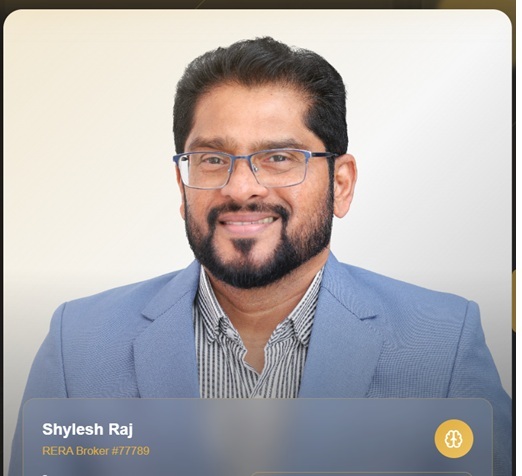
Shylesh Raj NK
RERA Broker #77789 · CEO, Nexus Elite Properties LLC · UAE Golden Visa Holder
Shylesh Raj NK is a RERA-certified Dubai property advisor with 25+ years of UAE market experience. He advises HNI clients across India, the GCC, Europe, and Southeast Asia on entry strategy, developer selection, payment plan optimisation, and Golden Visa pathways.
Book a free consultation →