
Dubai Property for Indian Investors —
Tax, ROI, LRS Rules & Golden Visa 2026
Indian nationals are the #1 foreign buyers in Dubai — accounting for 20.6% of all foreign property purchases in early 2026 (DXBinteract / Harbor Real Estate data). This complete guide covers everything Indian and NRI investors need to know: LRS remittance rules, FEMA compliance, the India-UAE DTAA, best communities, step-by-step buying process, and the Golden Visa pathway.
20.6%
Indian share of Dubai buyers
$250K/yr
LRS limit (resident Indian)
0% UAE
Tax on Dubai rental income
AED 2M+
Golden Visa threshold
Why Indian Investors Choose Dubai Over Mumbai or Bengaluru
Dubai delivers everything the Indian domestic property market does not: hard-currency denomination, zero rental income tax, 6–9.5% gross yields, and a 10-year residency visa. With the INR depreciating against the USD at a historical average of 3–4% per year, a Dubai property purchase is simultaneously a yield play, a capital appreciation play, and a currency hedge.
| Factor | 🇦🇪 Dubai | 🇮🇳 Mumbai | 🇮🇳 Bengaluru |
|---|---|---|---|
| Gross Rental Yield | 6–9.5% | 2–3% | 2.5–3.5% |
| Income Tax on Rent | 0% | 10–30%+ | 10–30%+ |
| Capital Gains Tax | 0% | 12.5–20% | 12.5–20% |
| Stamp Duty | 4% DLD (one-time) | 5–6% | 5–7% |
| Currency | AED (USD-pegged) | INR (depreciating) | INR (depreciating) |
| Entry Price (1BR) | AED 620K (~₹1.4Cr) | ₹1.5–2.5Cr+ | ₹80L–1.5Cr |
| Golden Visa / Residency | Yes — AED 2M+, 10 years | N/A | N/A |
| Foreign ownership | 100% freehold | Restricted to citizens | Restricted to citizens |
Exchange rate used: AED 1 = ₹22.8 (indicative, July 2026). Indian income tax rates for HNI (highest slab). Consult a CA for personal tax assessment.
NRI vs Resident Indian — Who Can Buy and How
Both Non-Resident Indians (NRIs) and Resident Indians living in India can purchase freehold property in Dubai. The process differs primarily in how funds are remitted.
Non-Resident Indian (NRI)
No LRS capIndian living & working outside India
- ✓No annual remittance limit — can buy at any budget
- ✓Use NRE account (tax-free in India) or overseas funds
- ✓NRO funds can be repatriated up to USD 1M/year with CA certificate
- ✓No TCS deduction on overseas fund transfers
- ✓If UAE tax resident (183+ days): strong DTAA protection
- ✓Most Dubai-based Indian buyers fall into this category
Resident Indian
LRS limit: $250K/yrIndian citizen living in India
- ✓LRS cap: USD 250,000 per person per financial year
- ✓Couples can jointly use USD 500,000 combined
- ✓Off-plan plans allow spreading across multiple years
- ✓20% TCS on remittances above INR 7 lakh (creditable in ITR)
- ✓Must use AD bank with Form A2, purpose code S0005
- ✓Must declare Dubai property in ITR Schedule FA each year
LRS Remittance — Step-by-Step for Resident Indians
For NRIs: skip to Step 5 — remit from NRE/NRO or overseas account directly to UAE developer escrow.
Determine your LRS headroom
Each resident individual can remit up to USD 250,000 per financial year (April–March). Check how much you have already used in the current year. A couple can pool USD 500,000 combined.
Contact your AD bank
Visit your authorised dealer (AD) bank — SBI, HDFC, ICICI, Axis, or any RBI-authorised bank. Inform them the purpose is overseas property purchase. They will guide you on Form A2 and documentation required.
Complete Form A2 and KYC
Fill Form A2 with purpose code S0005 (purchase of immovable property outside India). Provide KYC documents, PAN card, passport, property documents (SPA/booking agreement), and developer escrow account details.
Bank remittance to escrow
Your bank remits the amount directly to the developer's DLD-registered escrow account in the UAE. Funds must come from your own account — not a relative's NRI account or via hawala.
Claim TCS credit in ITR
If your remittance exceeds INR 7 lakh, your bank deducts TCS at 20%. Keep Form 27D (TCS certificate). Claim this as advance tax credit when filing your ITR. If TCS > tax liability, you receive a refund.
Declare in ITR — Schedule FA
Every financial year, declare your Dubai property in Schedule FA (Foreign Assets) of your Indian ITR. Report rental income in Schedule FSI. Failure to declare attracts penalties under the Black Money Act.
⚠ TCS on LRS Remittances — How It Works
From October 2023, 20% TCS applies to LRS remittances above INR 7 lakh per year. For a ₹50 lakh remittance, your bank deducts TCS of approximately ₹8.6 lakh at the time of transfer.
This is not a final tax — it is an advance tax credit. Claim it in your Indian ITR (Form 27D). If your total tax liability for the year is lower than TCS deducted, you receive a refund from the Income Tax Department. Maintain cash flow reserves to cover TCS before the ITR refund cycle.
India-UAE DTAA — Tax Implications Explained
The India-UAE Double Taxation Avoidance Agreement (DTAA) has been in force since September 1993. It governs how income flowing between India and the UAE is taxed. For Dubai property investors, the key provisions are:
Dubai rental income — UAE: 0% tax
UAE charges zero income tax on rental earnings. However, Indian tax residents must declare this income in Schedule FSI of their Indian ITR and pay applicable Indian income tax. NRIs who are UAE tax residents (183+ days in UAE) are generally not required to include this in their Indian ITR, provided they hold a UAE Tax Residency Certificate (TRC) from the UAE Federal Tax Authority.
Capital gains on Dubai property sale — UAE: 0%
The UAE charges zero capital gains tax on property sales. Under the India-UAE DTAA, gains from the sale of immovable property (real estate) are generally taxable in the country where the property is situated — which is the UAE (0%). Indian tax residents may still need to declare the gain and claim exemption under DTAA in their ITR. Consult a CA familiar with DTAA before selling.
NRO account interest — DTAA reduces to 12.5%
Without a DTAA claim, India deducts TDS on NRO interest at 30%. With a valid UAE TRC + Form 10F, this reduces to 12.5% under the India-UAE DTAA. NRE accounts are already tax-free in India regardless of DTAA.
Indian dividends — DTAA reduces to 10%
Dividends received from Indian companies are normally taxed at 20% in India. UAE residents with a valid TRC pay only 10% under the India-UAE DTAA.
📋 To claim DTAA benefits in India, you need:
1. UAE Tax Residency Certificate (TRC) — issued by UAE Federal Tax Authority (FTA) after 183+ days of physical presence in UAE · 2. Form 10F — self-declaration filed electronically on the Indian income tax portal · Without both documents, Indian payers deduct TDS at full domestic rates.
Best Dubai Communities for Indian NRI Investors — 2026
Entry prices below are shown in both AED and approximate INR at ₹22.8 per AED.
JVC (Jumeirah Village Circle)
8–9.5% yieldFirst-time NRI investors, yield-first strategy. Highest yield in Dubai. Off-plan available.
Dubai Silicon Oasis
7.5–8.5% yieldTech professionals. Corporate tenant base from DSO free zone. Oasiz by Danube available.
Al Furjan
7–8% yieldEstablished community, metro access. John Richmond District available. Family-oriented tenants.
Business Bay
6.5–7.5% yieldGolden Visa eligible (AED 2M+). Corporate demand. Mercedes-Benz Places available.
Meydan / Crystal Lagoon
7–8.5% yieldWaterfront lifestyle. Wynwood Horizon available. Strong rental demand from lifestyle-seeking tenants.
Dubai Marina / JBR
5.5–7% yieldShort-term rental potential (Airbnb 10–14%). Golden Visa eligible. Strong resale liquidity.
Buying Dubai Property from India — Step by Step
Define Budget & LRS Plan
Clarify whether you are a Resident Indian (LRS limit applies) or NRI (no LRS cap). Plan your LRS calendar across financial years if needed. For off-plan, spread payments to stay within annual limits.
Get RERA Advisor + Property Shortlist
Engage a RERA-registered broker (Shylesh, RERA #77789). Receive shortlist matched to your budget, yield target, and payment plan preference. No buyer commission in Dubai — developer pays broker fee.
Reserve & Sign SPA
Pay 5–10% booking amount (off-plan) or 10% MOU deposit (ready). Sign the Sales & Purchase Agreement (SPA). For off-plan, your funds go into DLD-registered escrow immediately.
DLD Registration & Oqood/Title Deed
Property is registered with the Dubai Land Department. For off-plan: Oqood registration. For ready: Title Deed issued. DLD fee: 4% of property value + AED 580 admin.
Remit via LRS / NRE-NRO
Resident Indians remit each instalment via AD bank Form A2 (purpose code S0005). NRIs remit directly from NRE/NRO or overseas accounts. All funds go to developer's DLD-registered escrow.
Handover & Rental Setup
On completion, receive keys and Title Deed. Appoint a RERA property management company for tenant sourcing, Ejari registration, and rent collection. Declare rental income in Indian ITR if tax resident of India.
UAE Golden Visa for Indian Investors
AED 2M+ Property = 10-Year UAE Residency
Indian nationals who invest AED 2,000,000 (≈ ₹4.56 Crore) or above in Dubai property qualify for the UAE 10-Year Golden Visa. The Golden Visa covers you, your spouse, children of any age, and up to 3 domestic staff. Zero physical residency requirement. Renewable every 10 years.
AED 2M
Minimum investment
₹4.56 Cr
In INR (approx)
10 Years
Visa validity
None
Physical presence req.
Frequently Asked Questions
Can Indian residents (not NRIs) buy property in Dubai?▼
What is the LRS limit for buying Dubai property from India in 2026?▼
Do NRIs have an LRS limit when buying Dubai property?▼
Is Dubai rental income taxable in India?▼
What is TCS on LRS remittances and how does it work?▼
What is the India-UAE DTAA and how does it help Indian property buyers?▼
Can Indian investors get a UAE Golden Visa through Dubai property?▼
What are the best areas in Dubai for Indian NRI investors?▼
How do I remit money from India to buy Dubai property legally?▼
How does Dubai property compare to Mumbai or Bengaluru investment?▼
Do I need a visa to buy property in Dubai as an Indian national?▼
Tax & Legal Disclaimer: This guide is for general information only and does not constitute tax, legal, or financial advice. LRS limits, TCS rates, DTAA provisions, and Indian income tax rules are subject to change. Always consult a qualified Chartered Accountant (CA) familiar with cross-border taxation before making any remittance or investment decision. Exchange rates are indicative only.
Talk to a RERA-Certified Advisor
Get a Personalised NRI Investment Brief
Shylesh Raj NK (RERA #77789) has advised hundreds of Indian NRI and HNI investors on Dubai property entry strategy, LRS-optimised payment plans, and Golden Visa applications.
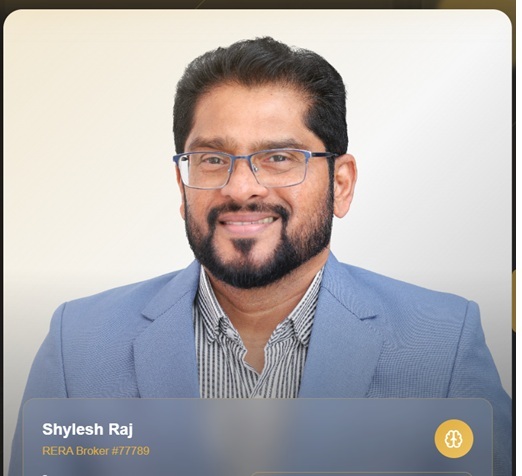
Shylesh Raj NK
RERA Broker #77789 · CEO, Nexus Elite Properties LLC · UAE Golden Visa Holder
Shylesh Raj NK is a RERA-certified Dubai property advisor who has guided hundreds of Indian NRI and HNI investors from Mumbai, Delhi, Bengaluru, Chennai, and across the GCC through the Dubai property investment process — from LRS planning through to Golden Visa issuance.
Book a free consultation →